
PAkinam Zeid 2026
Supervision: Univ.Prof.in Dipl.-Ing.in Dr.-Ing.in habil. Heike Oevermann, M.A.
Amending the Europeanized Discourse on the Conservation of Industrial Sharing Heritage
Studying Egyptian Industrial Case-Studies of Egyptian-European Alliance in the era of Nasser (1952-1970)
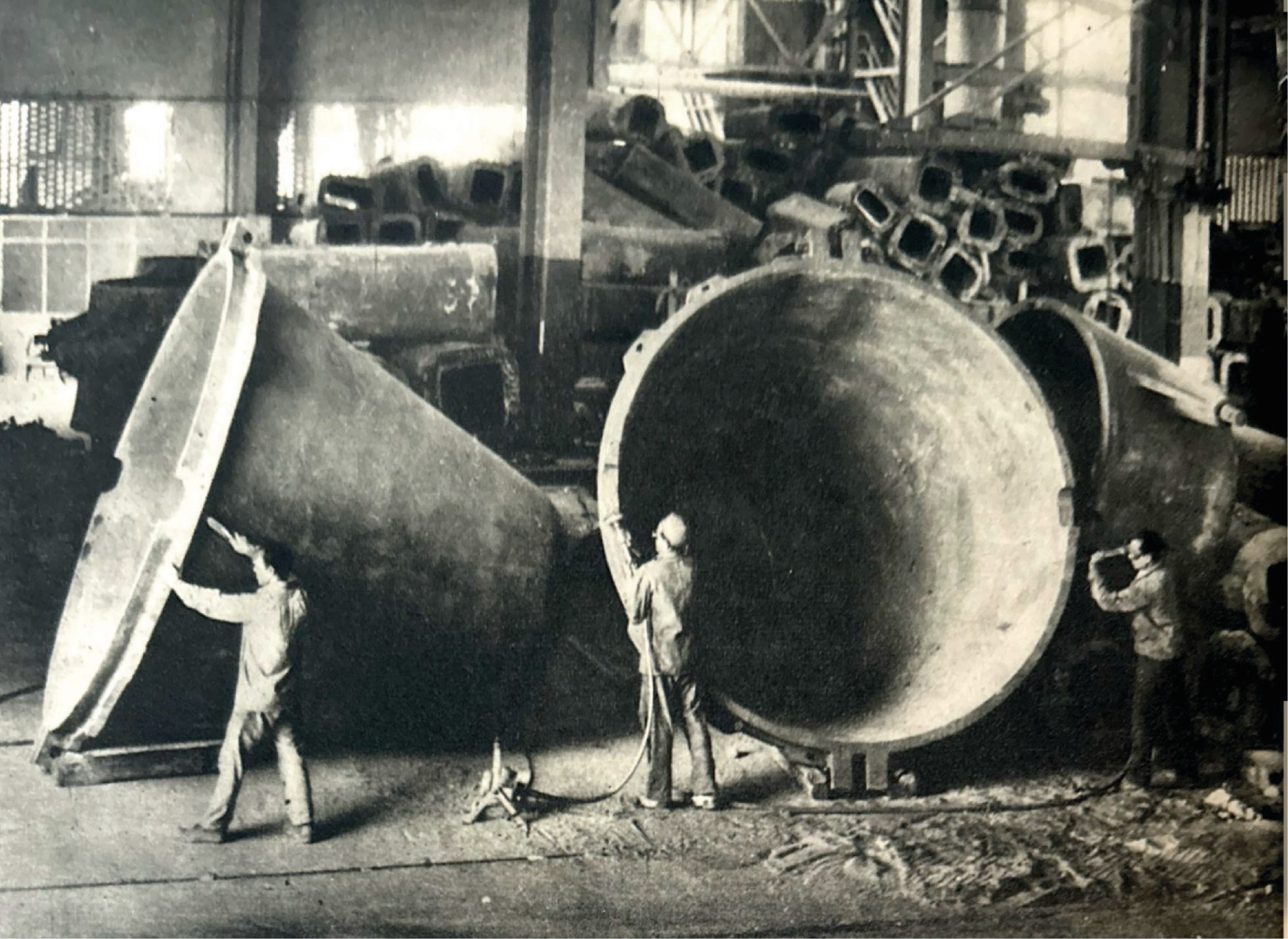
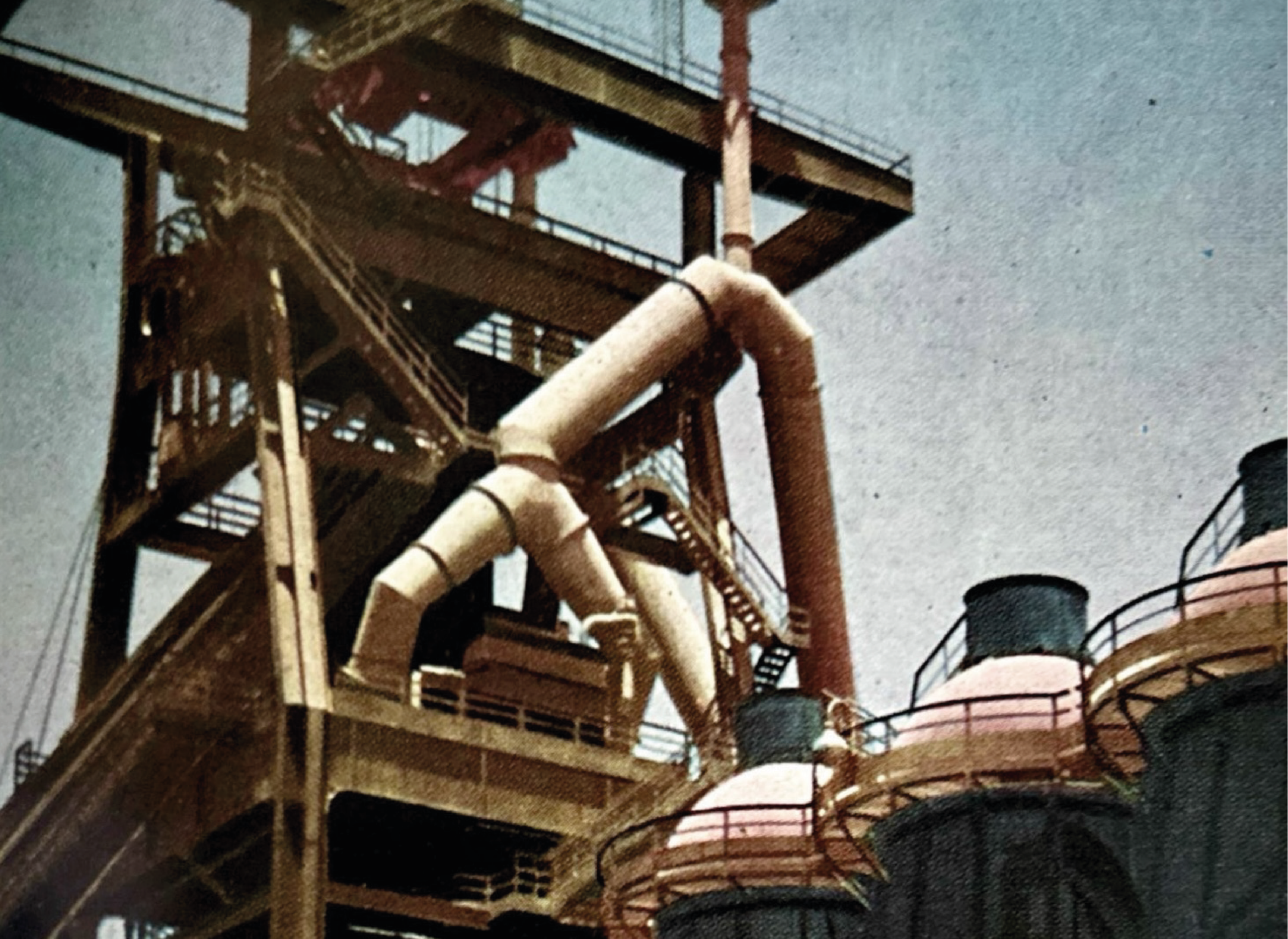
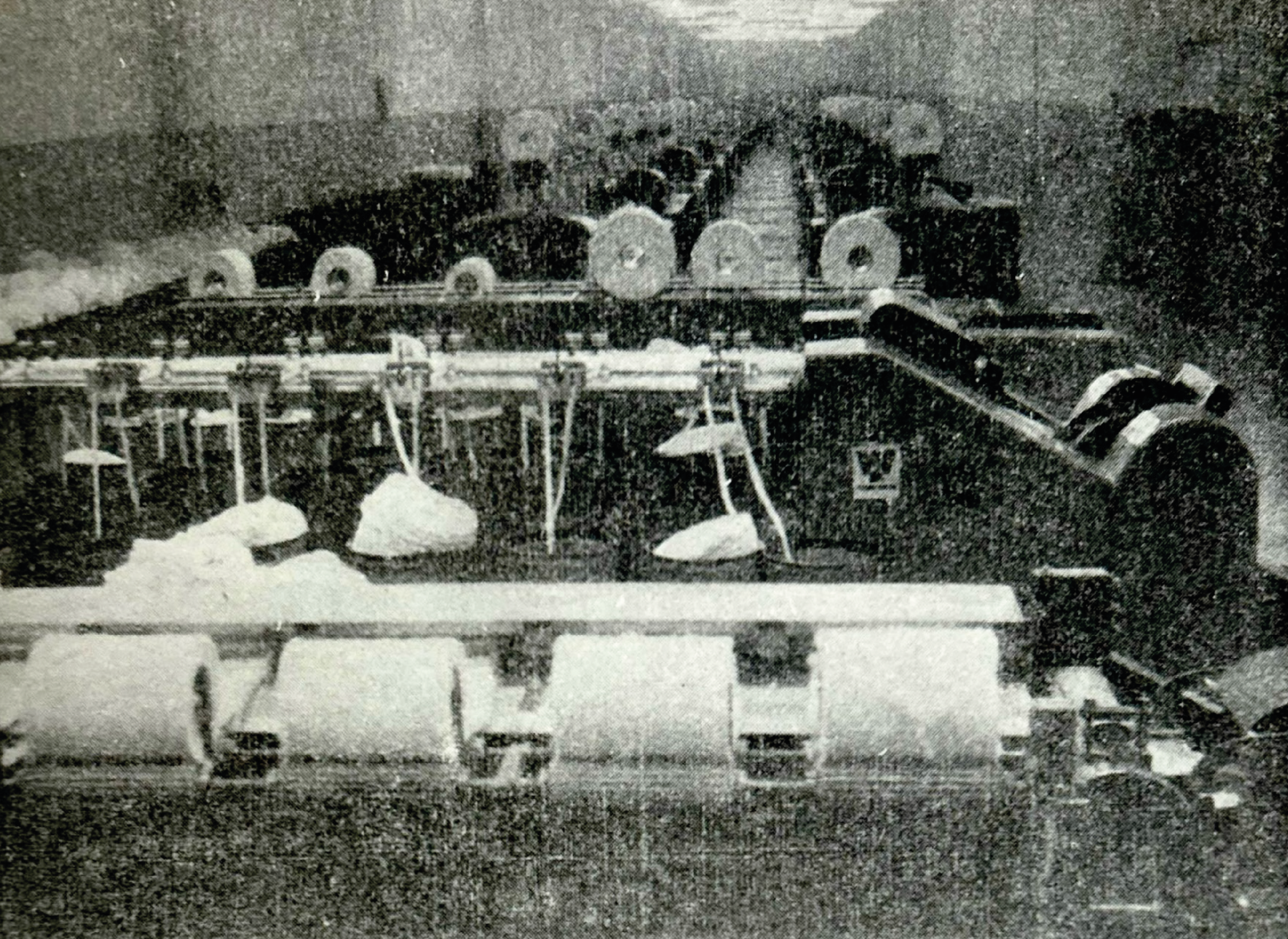
Courtesy of Mirhan Damir’s private archival collection. From: 12 Years of Industrial Development, 1952–1964, United Arab Republic, Ministry of Industry and Mineral Resources, Cairo, 1964.
The ways in which we understand, interpret, conserve, and engage with the past are undergoing profound transformation. The risk of ‘homogenising of societies’ cultures is especially eminent, furthermore, in the age of prevailing instrumentalization of information technologies (ITs) and artificial intelligence (AI). The abundance of such tools has enabled and facilitated ‘sharing’ and ‘usage’ of resources instrumental to cultural conservation and transmission of information. Multilayered meanings and agencies present in the field of cultural heritage thence stand to be tampered with, misused, and weaponized for various political, social, and economic purposes. Demands for rigorous scrutiny in terms of such implications have been made vocal in the literature and conferences especially by practitioners and academics studying the Global South.
Key industrial events of the 19th and 20th centuries are indispensably dependent upon traces and imprints of colonial projects of exploitation in the Global South. The industrial legacy and culture, when viewed from a ‘sharing heritage’ perspective mandate a documentation that includes the local narrative, which, in turn, allows the inclusion of dark aspects/sides (e.g. pollution, social inequality, and poverty). Furtherly, post-colonial entanglements with global powers, resonating from Cold-War dynamics attribute to intricate modern industrial heritage of former colonies of the Global South.
Confounded in the significant era of Nasserist Egypt 1952-1970 (also called the United Arab Republic from 1958-1971) are multiple initiatives from the Afro-Asian-Arabic (and Latin American) nations that sought a strengthening union that allowed the support of newly decolonial nations. Such can be witnessed in the perpetual springing of transnational meetings that followed the Bandung Conference (1955), the establishment of the ‘non-aligned’ movement (1961), counterbalancing the bi-polarization of the world as a result of Cold-War dynamics, drawing an end to the exploitative era of colonialism. Industrialization of the young republic of Egypt can be seen to reflect this rationale in its alliances, policies, and expeditions: exploitation was denied at all costs while peaceful and productive exchanges were proliferated. Thus, were borne important consequences and alliances in the construction of multiple industrial buildings and artefacts.
Attributing to a conservation management plan (CMP) with the Polyvalenz particularity of a global/local heritage would highlight the chosen sites’ significance and the principles by which the programme to sustain its significance should abide: simply deliberating an understanding of what is there, why it matters, and what is happening to it to furtherly procure management, maintenance, use, access, and/or other issues. In the discussion and conclusion are resolutions reached after analytical and documenting methodologies are undertaken with the case-studies, thence can the research argue transferability of the values and learned lessons to the broader field of heritage conservation and prospective CMP – within the retrospect of local applications, challenges, and limitations.